A full-mouth restoration is not one treatment with one predictable look. The most useful full arch implant examples show how the same goal – a stable, confident smile – can require very different treatment plans depending on bone volume, gum health, bite, facial aesthetics, and whether you need one arch or both.
For patients considering treatment in Istanbul, understanding these distinctions before traveling can make the experience feel more controlled and far less overwhelming. A polished final smile begins with a plan that respects both clinical realities and your expectations for comfort, appearance, and function.
What Is a Full Arch Implant Restoration?
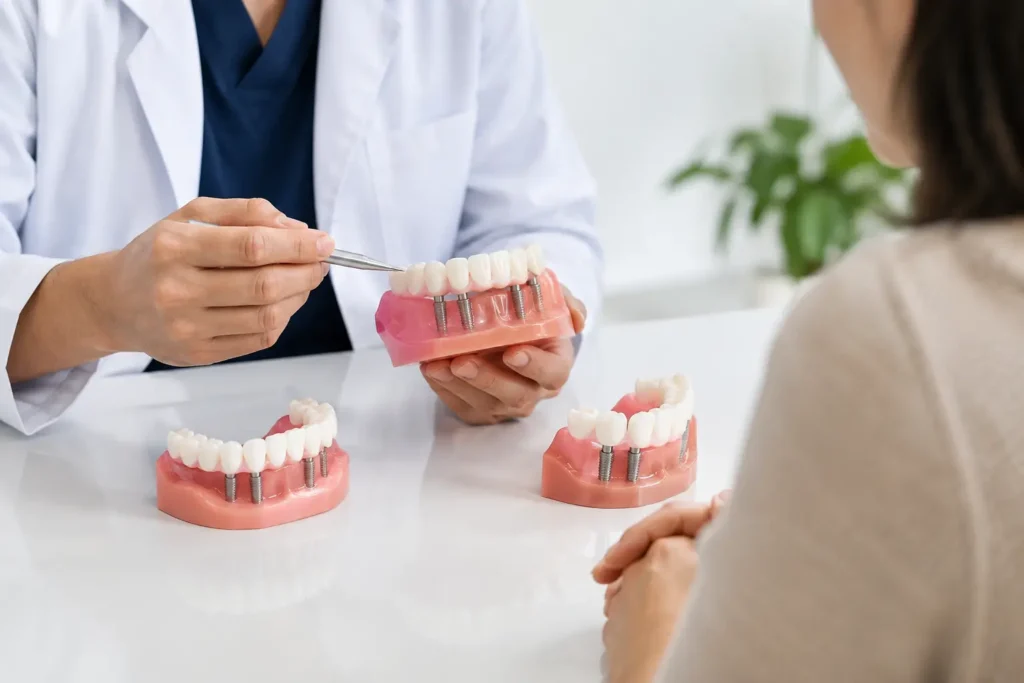
A full arch implant restoration replaces all teeth in either the upper jaw, lower jaw, or both. Rather than placing one implant for every missing tooth, an experienced implant team strategically positions a limited number of implants to support a full bridge of teeth.
The bridge may be fixed in place, meaning only a dental professional removes it, or removable for cleaning. Fixed solutions are often the preferred choice for patients seeking the closest experience to natural teeth, while removable overdentures can be appropriate when anatomy, budget, or treatment goals point in that direction.
The number of implants is only one part of the story. The material, bite design, shade, gum-colored porcelain or acrylic used when needed, and the timing of the final bridge all influence how the restoration feels and performs.
Full Arch Implant Examples for Different Needs
Example 1: Immediate fixed teeth with an All-on-4 approach
A patient has failing lower teeth caused by long-term gum disease and wants to avoid a period without teeth. After a detailed examination and 3D imaging, the clinical team determines that four implants can be placed in strategic positions, often with the rear implants angled to use available bone effectively.
If primary implant stability is strong enough, the patient may receive a fixed temporary bridge shortly after surgery. This temporary smile is designed for healing, not as the final restoration. After the bone and gums stabilize, the final bridge is created with the bite, tooth proportions, and smile line refined in greater detail.
This is one of the most familiar full arch implant examples because it can reduce the need for certain bone grafting procedures and may offer immediate cosmetic improvement. However, immediate loading is never automatic. Bone quality, implant stability, medical history, clenching habits, and infection levels must all be evaluated before a provider recommends it.
Example 2: Six implants for added support in the upper jaw
The upper jaw often presents different challenges than the lower jaw. Its bone can be less dense, and it affects speech, lip support, and the visibility of the smile. For a patient replacing an upper arch with significant tooth loss, six implants may be recommended to provide broader support for a fixed bridge.
This approach can be especially valuable for patients with a strong bite, a wider arch, or a desire for a more substantial zirconia final bridge. The final design may also include carefully shaped pink material to replace lost gum tissue and restore facial support where natural gums have receded.
More implants do not automatically mean a better result. They can offer additional distribution of force in certain cases, but the right number depends on anatomy and prosthetic design. A premium treatment plan should explain why a specific implant count is being recommended rather than treating every patient the same.
Example 3: A full arch bridge after bone grafting and healing
Some patients have been missing teeth for years and have experienced substantial jawbone loss. In those situations, placing implants immediately may not be the best clinical path. Bone grafting, sinus lifting in the upper jaw, or another preparatory procedure may be needed before implants can be placed securely.
This plan takes longer, but it can create a stronger foundation for a lasting restoration. A patient may wear a temporary removable denture during healing, then return for implant placement and later for the final bridge.
For American patients planning dental travel, this is where clear coordination matters. Multi-stage care requires a realistic travel timeline, reliable communication between visits, and a clinic that does not compress healing simply to fit a preferred schedule. The most elegant result is not always the fastest one.
Example 4: Implant-supported overdenture for a practical balance
Not every full arch solution needs to be fixed permanently. An implant-supported overdenture snaps securely onto implants but can be removed by the patient for cleaning. It is much more stable than a traditional denture and can significantly improve chewing confidence, yet it generally requires fewer implants and may be more accessible financially.
This option may suit someone who has worn dentures for years, has limited bone, or prefers a restoration that is easier to remove and maintain. It can also be a thoughtful option for patients who want implant support but are not ready for the investment or surgical complexity of a fixed bridge.
The trade-off is experience. A removable prosthesis does not feel identical to fixed teeth, and it may have more palate coverage in the upper jaw. Still, for the right patient, it can offer a life-changing improvement in stability and quality of life.
The Materials Change the Look and Long-Term Experience
A temporary full arch is commonly made from reinforced acrylic or a similar provisional material. It allows the team to evaluate your bite, speech, comfort, and aesthetic preferences while healing progresses. This stage is valuable because it provides a real-world preview before the final bridge is made.
Final restorations may use zirconia, porcelain-fused options, or high-quality acrylic systems. Zirconia is often selected for its refined appearance, durability, and resistance to staining. It can deliver a beautifully natural result, particularly when the bridge is designed with individualized shading and texture rather than a flat, artificial white.
Acrylic-based final bridges can be lighter and easier to repair in some circumstances, though they may wear over time. There is no universal “best” material. The correct choice depends on bite force, opposing teeth, facial design goals, maintenance preferences, and the amount of gum replacement required.
What Before-and-After Photos Cannot Tell You
Smile transformation photos can be inspiring, but they should not replace a clinical conversation. Two people can appear to have similar missing teeth while needing entirely different treatment paths beneath the surface.
A thoughtful review should address the quality and quantity of bone, active gum disease, the condition of remaining teeth, sinus position, bite alignment, smoking status, diabetes management, and nighttime grinding. It should also discuss whether extracting remaining teeth is truly necessary or whether some healthy teeth can be preserved.
Ask how the temporary restoration will be managed, when a final bridge is expected, what material is proposed, and what happens if additional treatment becomes necessary after imaging. Clear answers are part of a luxury patient experience. So is being told when a requested plan is not the safest choice.
Planning Full Arch Implant Treatment in Istanbul
International care works best when the clinical plan and travel plan are aligned from the beginning. Before you travel, you should have a clear understanding of the expected treatment phases, the approximate time needed in Istanbul, and whether a second visit is anticipated for final restorations.
Fix Dental Consultation helps U.S. patients organize that journey with consultation support, affiliated clinic coordination, communication assistance, and concierge-style travel guidance. The goal is not simply to arrange an appointment. It is to help you arrive prepared, supported, and informed about the decisions ahead.
During your on-site assessment, imaging and an in-person examination may refine the preliminary recommendation. This is normal and responsible. A remote review can provide direction, but the final treatment plan should be based on what the clinical team can confirm in person.
Choosing the Example That Fits Your Smile
The best of these full arch implant examples is not necessarily the one with the fewest implants, the fastest timeline, or the brightest final photo. It is the plan that gives your jaw, bite, and long-term comfort the attention they deserve.
A full arch restoration can be a remarkable turning point – from avoiding photographs and limiting favorite foods to smiling, speaking, and traveling with greater ease. Begin with a detailed consultation, bring your questions, and choose a care path that feels as considered as the transformation you want to achieve.