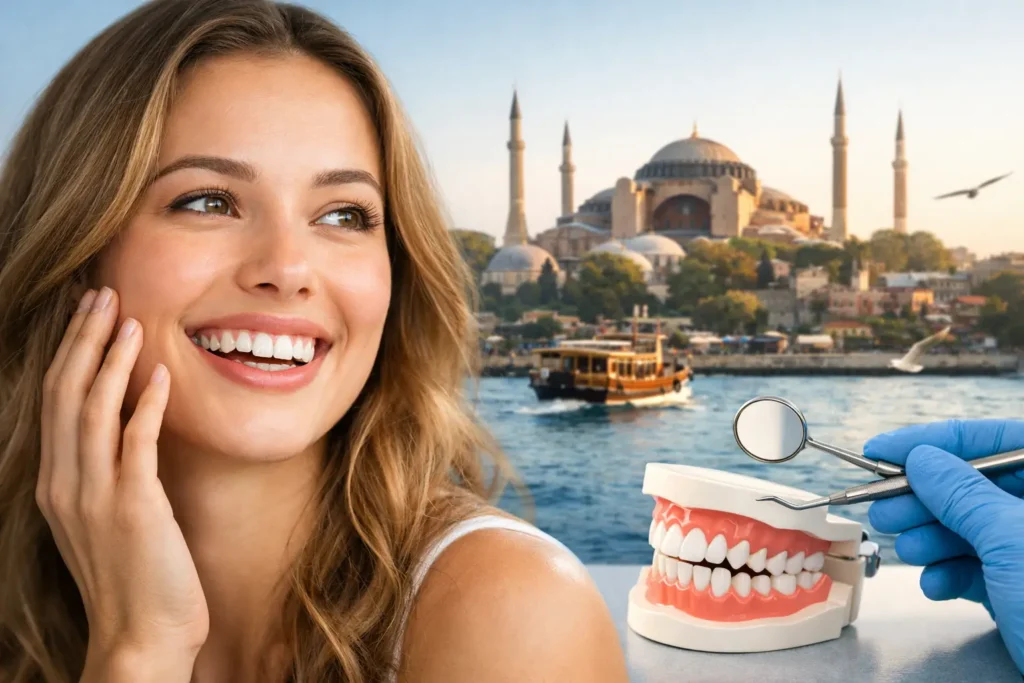
A beautiful smile should look like it belongs to the person wearing it. That principle guided this smile makeover case study: not a one-size-fits-all row of ultra-white teeth, but a carefully planned transformation designed around facial balance, comfort, function, and the patient’s own goals.
The case below is a representative composite based on the planning considerations common to comprehensive cosmetic treatment. Every patient requires an individual clinical examination, diagnosis, and treatment plan from a qualified dentist. Still, it offers a clear picture of what a premium smile transformation journey can involve when clinical care and international travel coordination are handled with equal attention to detail.
The Patient’s Starting Point
The patient was a 38-year-old U.S. professional who had spent years avoiding close-up photos and covering her mouth when she laughed. Her concerns were not limited to tooth color. She felt that older bonding on her front teeth looked uneven, slight crowding distracted from her smile, and a worn edge on one incisor made her teeth appear asymmetrical.
She wanted a brighter, more polished look, but she was clear about one thing: she did not want an artificial result. Her goal was a smile that looked refined in business settings, flattering in photographs, and believable at conversational distance.
Like many patients considering cosmetic dentistry abroad, she was also weighing practical concerns. She wanted access to experienced cosmetic providers and state-of-the-art facilities, yet did not want the uncertainty of arranging treatment, appointments, transfers, and communication in an unfamiliar city on her own.
Smile Makeover Case Study: The Planning Stage
The most significant decisions in a smile makeover happen before treatment begins. A quality plan is not simply about selecting veneers or choosing the brightest shade available. It begins with understanding oral health, bite dynamics, tooth proportions, gum display, facial features, and expectations.
During the initial consultation process, the patient shared photographs, dental history, and her aesthetic priorities. The clinical team’s assessment indicated that her gums were healthy and that her teeth could support a conservative cosmetic approach. There was no reason to recommend implants, which would have been unnecessary for her situation. That distinction matters. A premium recommendation is not the most extensive treatment. It is the treatment that serves the patient’s needs responsibly.
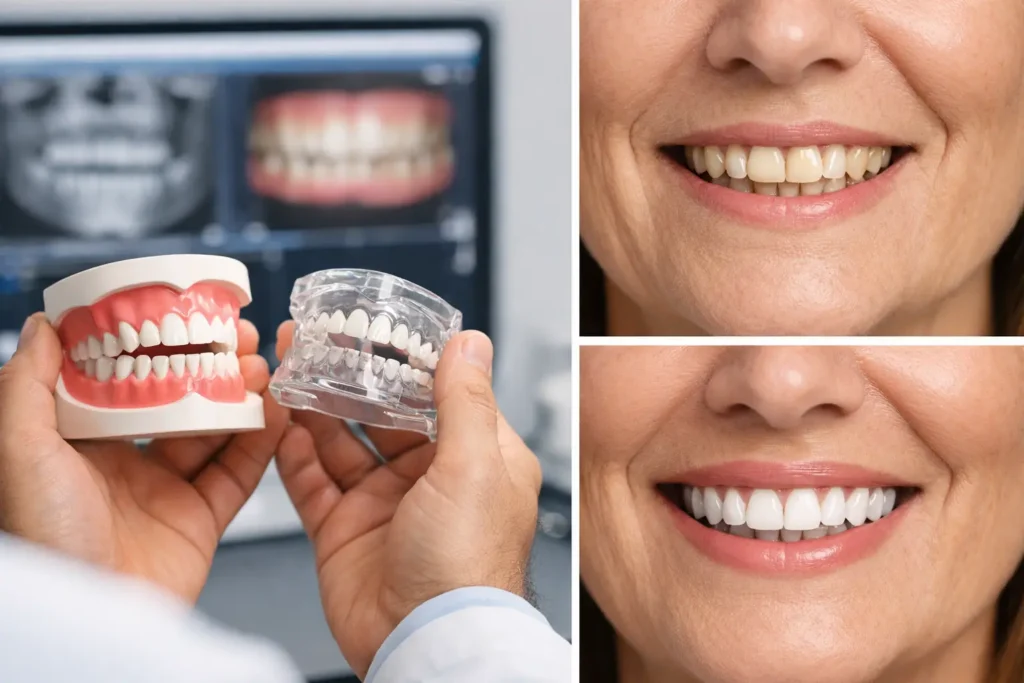
The proposed approach included professional hygiene care, careful shade selection, and a limited number of custom ceramic veneers for the visible upper and lower teeth. Existing bonding would be replaced where needed, and the final shapes would be designed to soften the unevenness without making every tooth identical.
The patient was shown how subtle choices could affect the outcome. A very bright shade could create a dramatic camera-ready appearance, but it might contrast too sharply with her complexion and lower teeth. A softer, luminous shade offered a more natural high-end finish. She chose the second option.
This is where personalized design becomes essential. The “Hollywood Smile” is often used as a broad term, but the best results are individualized. Some patients want a brilliant, high-impact look. Others want discreet corrections that simply make them appear well-rested, healthy, and confident. Neither preference is inherently better.
Why Istanbul Was Part of the Decision
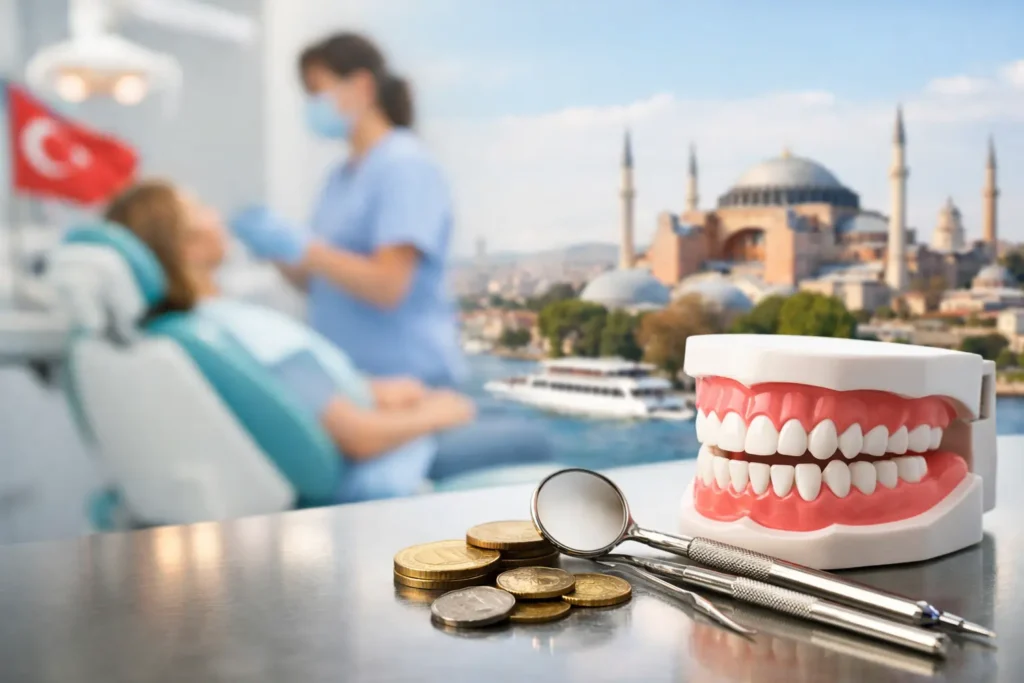
For this patient, choosing Istanbul was about more than treatment value. She wanted a coordinated experience with a clear point of contact from the United States through her return home. Fix Dental Consultation helped organize the journey around affiliated clinic options, appointment scheduling, certified communication support, transportation, and accommodation guidance.
That concierge structure can reduce the friction that often keeps patients from pursuing major dental work abroad. Instead of managing each moving part independently, the patient had an organized itinerary and support around the experience. She could focus on her treatment and enjoy Istanbul between appointments.
Convenience, however, should never replace due diligence. Patients should still ask direct questions about credentials, materials, treatment timelines, warranties or aftercare policies, and what happens if an adjustment is needed after they return home. International care works best when expectations are specific and communication is transparent.
Treatment Day by Day
On arrival, the patient attended an in-person examination and diagnostic review. This step confirmed whether the preliminary plan remained appropriate once the dentist could assess her teeth, gums, and bite directly. Her treatment was then finalized with attention to preserving as much natural tooth structure as clinically appropriate.
The preparation phase was intentionally conservative. The dentist refined the teeth only where necessary to create room for the ceramic restorations and improve alignment. Temporary veneers allowed the patient to preview the length, shape, and overall character of the proposed smile before the final ceramics were placed.
That preview was a valuable checkpoint. The patient liked the improved symmetry but felt the initial upper central teeth looked slightly too long. A small adjustment to the temporary design created a result that felt more like her. This is one of the clearest advantages of a thoughtful process: feedback is welcome before the final work is completed, not after.
Once the final restorations were ready, the dentist checked color, fit, gum-line harmony, bite contact, and phonetics. The patient read aloud and smiled naturally in different positions. A successful cosmetic result must feel comfortable during ordinary life, not only look attractive in a mirror.
The Result: Noticeable Without Looking Overdone
The completed smile was brighter, more even, and more balanced with the patient’s face. The worn edge that had bothered her was no longer visible, the previous bonding no longer created visual interruptions, and the subtle crowding was softened through the new proportions of the teeth.
What changed most was not simply the color. It was the overall sense of harmony. Her teeth appeared healthy, polished, and naturally proportioned rather than uniformly manufactured. Friends noticed that she looked refreshed, though several could not immediately identify why.
That reaction is often the hallmark of well-executed cosmetic dentistry. A transformation can be significant without appearing excessive. The best smile design respects the patient’s age, personality, facial structure, and lifestyle.
What This Case Teaches Prospective Patients
A makeover is not automatically the right answer for every cosmetic concern. Whitening may be enough for patients with healthy, well-aligned teeth. Orthodontic treatment may be the better choice when spacing or crowding is substantial and preserving natural enamel is the priority. Implants may be necessary when missing or failing teeth affect both function and appearance.
Veneers can be an excellent option for discoloration, shape concerns, minor alignment issues, worn edges, and old cosmetic restorations. Yet they are a commitment. They require meticulous home care, professional maintenance, and appropriate habits. Patients who clench or grind may need a night guard, and no ceramic restoration is indestructible.
Treatment timing also varies. Some smile makeovers can be completed during a planned stay in Istanbul, while more complex restorative or implant cases may require a staged approach and additional healing time. Anyone promising the same treatment timeline for every patient is overlooking the clinical realities that protect long-term results.
The right question is not, “What is the fastest makeover available?” It is, “What plan gives me a result I can live with comfortably and confidently for years?”
A More Confident Next Step
For Americans considering cosmetic dentistry in Turkey, the process should feel elevated, organized, and personal from the first conversation. A well-planned consultation can clarify your priorities, help distinguish between whitening, orthodontics, veneers, and restorative options, and show you what a realistic treatment journey may look like.
Your smile does not need to copy anyone else’s to make an impression. The most rewarding transformation is one that lets you speak, laugh, travel, and step into photographs with less hesitation and more ease.