A brighter smile can look effortless in photos, on video calls, and across the table at dinner, but the science behind that glow is more precise than most people realize. If you have ever wondered how do teeth whitening treatments work, the answer starts with chemistry, enamel structure, and the type of staining you are trying to remove. Whitening is not simply “scrubbing away” discoloration. It is a controlled process designed to break apart stain molecules so teeth appear lighter, cleaner, and more uniform.
For patients considering cosmetic dentistry, that distinction matters. Whitening can deliver a dramatic refresh, but the best results depend on the cause of the discoloration, the strength of the treatment, and whether your teeth and gums are healthy enough to begin.
How do teeth whitening treatments work on the tooth surface?
Teeth whitening treatments usually rely on hydrogen peroxide or carbamide peroxide. These active ingredients penetrate the porous outer layer of the tooth, called enamel, and reach the discolored compounds beneath the surface. Once there, they release oxygen molecules that break apart the chemical bonds holding stain particles together.
That is why whitening is different from a standard cleaning. A cleaning removes plaque, tartar, and some external buildup. Whitening changes the appearance of the tooth itself by reducing the visibility of deep-set stains. In simple terms, the pigments become smaller and less concentrated, so the tooth reflects more light and looks brighter.
This process is especially effective for common lifestyle stains caused by coffee, tea, red wine, tobacco, and highly pigmented foods. It can also improve the yellowing that often comes with age, because enamel naturally thins over time and exposes more of the darker dentin underneath.
Not all discoloration responds the same way
This is where expectations need to stay refined and realistic. Whitening works beautifully for many patients, but not every type of discoloration responds in the same way.
Extrinsic stains sit on or near the enamel surface. These are often the easiest to treat and usually respond well to both in-office and take-home whitening systems. Intrinsic stains are deeper inside the tooth. They may be caused by trauma, certain medications, excessive fluoride exposure during development, or natural internal darkening. These can be more resistant and may need a different cosmetic approach.
There is also the question of existing dental work. Veneers, crowns, bonding, and fillings do not whiten the way natural enamel does. If your front teeth include restorations, whitening can create a mismatch unless the treatment is planned carefully.
That is one reason premium cosmetic providers begin with a detailed assessment rather than handing every patient the same gel. The treatment has to fit the smile, not the other way around.
Professional whitening vs over-the-counter options
Over-the-counter products can help with mild staining, but they are usually designed for convenience, not precision. Strips, pens, rinses, and generic trays often use lower concentrations of active ingredients. That makes them accessible, but it also means results may be slower, less even, and less predictable.
Professional whitening is different because it is supervised and customized. The gel strength is higher, the gums are protected, and the treatment can be tailored to your enamel condition, shade goals, and sensitivity level. This is where patients often see a more polished result in less time.
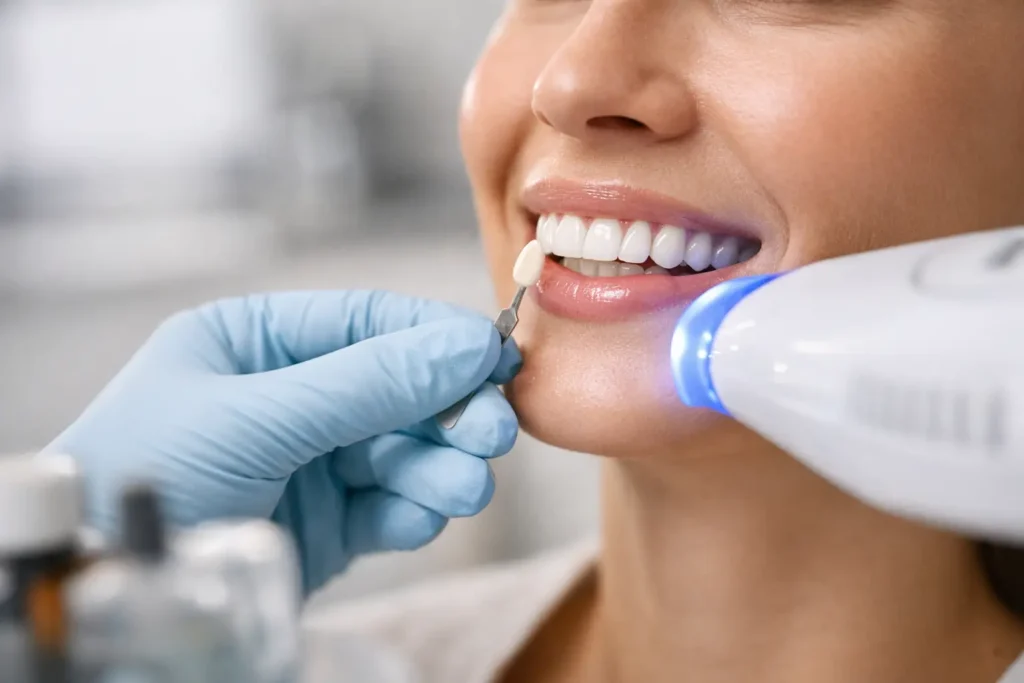
In-office whitening typically involves applying a concentrated peroxide gel after the lips and gums are carefully shielded. The product remains on the teeth for a controlled period, sometimes in several rounds during one appointment. Some systems use a special light or laser to accelerate the process, although the whitening agent itself is still doing the core work.
Take-home professional kits offer another route. These usually include custom trays made to fit your teeth closely, which helps the gel stay where it should and reduces irritation. They can be an excellent option for patients who want flexibility while still benefiting from professional oversight.
Why some treatments cause sensitivity
One of the most common concerns around whitening is sensitivity, and that concern is valid. As peroxide moves through enamel, it can temporarily irritate the inner tooth structure, especially if you already have sensitive teeth, exposed roots, worn enamel, or untreated cavities.
The good news is that this sensitivity is often short-lived. It may feel like a brief zing when breathing cold air, drinking iced water, or brushing. Professional providers can reduce the risk by adjusting gel strength, shortening treatment time, spacing sessions properly, and using desensitizing agents before or after whitening.
This is one of the major trade-offs with stronger treatments. Faster, brighter results can come with a higher chance of temporary sensitivity. That does not mean whitening is unsafe when done correctly. It simply means the treatment should be chosen with care.
What affects your whitening results?
The final shade you achieve depends on more than the product itself. Natural tooth color, stain depth, enamel thickness, age, diet, smoking history, and oral health all influence the outcome.
Yellow-toned teeth often respond better than gray-toned teeth. Recent staining is usually easier to lift than years of deep discoloration. Patients with excellent oral hygiene also tend to maintain results longer, especially if they limit dark beverages and tobacco after treatment.
Timing matters too. If you are planning veneers, crowns, bonding, or a more comprehensive smile makeover, whitening may need to happen first so the cosmetic work can be matched to the brighter shade. For patients exploring international cosmetic dentistry, this kind of sequencing is especially important because it helps avoid rushed decisions and uneven aesthetics.
How do teeth whitening treatments work in a full cosmetic plan?
Whitening is often treated like a stand-alone beauty service, but in many cases it works best as part of a broader smile strategy. If the teeth are healthy, aligned, and naturally shaped, whitening may be all you need for a cleaner, more youthful appearance. But if discoloration comes with spacing issues, worn edges, old restorations, or structural concerns, whitening alone may not create the transformation you want.
That is why high-end cosmetic treatment planning looks at proportion, symmetry, gum health, bite, and surface quality as well as color. A bright smile only looks truly elevated when the surrounding details support it.
For some patients, whitening is the finishing touch. For others, it is the first step before veneers, orthodontics, or a Hollywood Smile design. The right plan depends on the result you want and how much change your current smile needs.
Is teeth whitening safe?
When performed correctly on healthy teeth, whitening is generally considered safe. Problems usually happen when people use products too often, apply them incorrectly, ignore untreated dental issues, or chase unrealistic shades without guidance.
Whitening should not begin if you have active gum disease, tooth decay, cracked teeth, or exposed root surfaces that need attention first. Pregnant patients are also often advised to postpone elective whitening. A proper dental evaluation helps identify these factors before they become painful or expensive setbacks.
This is where a concierge-led treatment journey can make a meaningful difference. Patients traveling for cosmetic dentistry often want efficiency, but they also want confidence. Coordinated care, clear communication, and access to experienced providers make whitening feel less like guesswork and more like a polished clinical experience.
How long do results last?
Whitening is not permanent, but it can last impressively well with the right habits. For many patients, results remain noticeable for several months to a few years. The range is wide because lifestyle plays such a major role.
Coffee every morning, red wine on weekends, smoking, and poor oral hygiene can shorten the lifespan of your result. Occasional touch-ups, regular hygiene visits, and using a straw for darker beverages can help preserve brightness. Some patients also keep professionally prescribed trays for maintenance after their initial treatment.
The goal is not a blinding, artificial shade that fades fast. The most elegant whitening result looks fresh, healthy, and believable on your face.
Choosing the right whitening experience
The smartest way to approach whitening is to start with diagnosis, not marketing. You want to know why your teeth are discolored, what result is realistic, whether your restorations will match, and how sensitivity will be managed.
That is especially true if you are considering treatment abroad and want cosmetic results that justify the trip. Premium clinics and coordination teams should be able to explain the method, the expected outcome, and the aftercare with clarity. At Fix Dental Consultation, that kind of structured guidance is part of what makes a cosmetic journey feel elevated rather than overwhelming.
A brighter smile is never just about color. It is about precision, confidence, and choosing treatment that suits your teeth as they are now, not as a generic before-and-after promises they should be.