A loose lower denture can turn an ordinary dinner into a stressful event. It may shift when you speak, lift when you laugh, or make you choose softer foods than you actually want. That daily reality is why the implant bridge vs dentures decision is about far more than replacing missing teeth. It is about confidence, comfort, appearance, and how you want your smile to function for years ahead.
For patients considering restorative treatment in Istanbul, the right choice also depends on treatment timing, bone health, budget, and whether you are prepared for one visit or a staged plan. Both options can restore a complete smile beautifully when designed by an experienced dental team. The better option is the one that fits your clinical needs and your life.
Implant Bridge vs Dentures: The Essential Difference
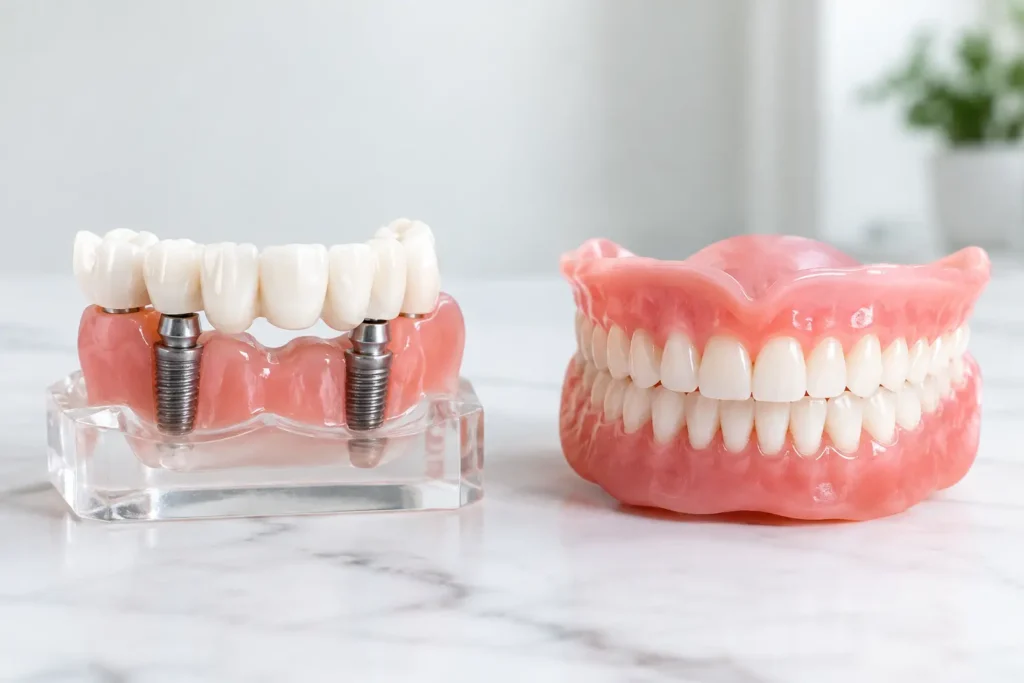
A removable denture sits on top of the gums. It may replace all teeth in an arch or only several missing teeth, and it can be taken out for cleaning. Modern dentures can look remarkably natural, especially when custom-made to match facial proportions, gum tone, and the character of your remaining teeth. They are a familiar and relatively fast solution.
An implant-supported bridge is fixed in place. Dental implants, which are small titanium posts placed in the jawbone, act as artificial tooth roots. Once the implants have integrated with the bone, a custom bridge is secured to them. For a full arch, a provider may use several strategically positioned implants rather than one implant for every missing tooth.
The practical distinction is simple: dentures rest on soft tissue, while an implant bridge is anchored to the jaw. That difference influences nearly every part of the experience, from chewing strength to maintenance requirements.
Why Stability Changes the Experience
A well-fitted denture can be comfortable, but it still relies on suction, gum contours, and sometimes adhesive to stay in position. Over time, the jawbone and gums naturally remodel after tooth loss. As that shape changes, a denture that once fit well may require adjustment, relining, or replacement.
An implant bridge does not move in the same way because it is fixed to implants. Many patients appreciate the ability to speak, smile, and eat without thinking about whether their teeth will shift. The sensation is often closer to having natural teeth, although it is not identical. Implants do not recreate the exact sensory feedback of natural tooth roots.
This stability can be particularly meaningful for lower dentures, which are often more difficult to retain than upper dentures. A full upper denture can gain some support from the palate. A lower denture has less surface area and must coexist with tongue movement, which can make it more prone to lifting or sliding.
Comfort, Appearance, and Everyday Eating
Dentures have come a long way. High-quality materials and thoughtful cosmetic design can create an attractive smile that complements your face. Yet a traditional upper denture typically covers part of the palate, which may affect how some people experience taste, temperature, and food texture. It may also take time to adapt to speaking clearly.
A fixed implant bridge usually leaves the palate uncovered. For many patients, this makes eating and speaking feel more natural. Because the bridge is secure, it can also support a more varied diet, including firmer foods that may be harder to manage with removable dentures.
That does not mean every implant bridge is automatically more comfortable. A bridge must be precisely planned and fabricated with the right contours, bite relationship, and hygiene access. An oversized or poorly designed restoration can feel bulky, collect food, or create pressure in the wrong areas. Premium results come from careful diagnostics and experienced restorative planning, not from the word “implant” alone.
Bone Preservation Is a Major Long-Term Consideration
When teeth are lost, the jawbone no longer receives stimulation from biting forces through the roots. Gradual bone loss can follow. This can alter facial support and make a removable denture less stable over time.
Implants transfer chewing forces into the jawbone, helping preserve bone around the implant sites. They cannot stop every change associated with aging or periodontal disease, but they offer a meaningful biological advantage over a conventional denture that rests on the gums.
Patients who have been without teeth for many years may already have significant bone loss. In some cases, bone grafting, sinus lifting, or a different implant strategy may be recommended. In others, skilled implant providers can use available bone strategically to avoid extensive grafting. Only a clinical examination and 3D imaging can determine what is appropriate.
Cost: Look Beyond the First Price
Dentures generally cost less upfront than an implant bridge. For someone who needs a functional solution quickly or has medical reasons that make surgery unsuitable, that lower initial investment can be the right choice.
An implant bridge requires surgical placement, advanced imaging, laboratory work, and a final custom restoration. Its price reflects a more involved treatment process. However, it may offer greater stability, reduced need for frequent relines, and a more fixed, natural-feeling experience over the long term.
The most useful comparison is not simply “cheap versus expensive.” Ask what is included in each treatment plan: temporary teeth, extractions, bone grafting if needed, the final bridge material, sedation options, follow-up care, and any adjustments. A transparent plan prevents surprises and makes it easier to compare recommendations responsibly.
For patients exploring treatment abroad, value can be compelling, but clinical standards should remain the priority. Verify credentials, request a clear treatment sequence, and understand what follow-up will look like once you return to the United States. A lower quote is only valuable if it supports a safe, well-coordinated result.
Treatment Time and Travel Planning
Dentures can often be completed more quickly, although immediate dentures made after extractions may need later adjustment as the gums heal. Conventional dentures may be created after healing for a more refined fit.
Implant treatment is often delivered in phases. Some patients qualify for implants and a fixed temporary bridge in the same visit, followed by a final bridge after healing. Others need extra time between surgery and final restoration. The timeline depends on bone quality, infection history, the need for grafting, bite forces, and the provider’s clinical protocol.
This is especially relevant for dental travel. An elite clinic should not promise every patient the same rapid turnaround. A premium treatment journey begins with proper records, imaging review, and honest expectations about whether one trip is realistic or a return visit is safer.
Fix Dental Consultation helps patients coordinate this process with affiliated Istanbul clinics, from early communication and clinic matching to travel-related support. That structure can make an extensive restorative plan feel far more organized, particularly when several appointments and recovery time must be considered.
Who May Be Better Suited to Dentures?
Dentures may be an excellent choice if you want a non-surgical option, need a lower upfront cost, have health conditions that require additional surgical caution, or prefer a faster restorative path. They can also serve as a temporary solution while you plan for implant treatment later.
They do require commitment. Daily cleaning, periodic professional evaluations, and possible fit adjustments are part of responsible denture care. Adhesives may improve retention for some patients, but they do not correct a poorly fitting denture.
Who May Be Better Suited to an Implant Bridge?
An implant bridge may be worth considering if you prioritize fixed teeth, stronger chewing confidence, a more natural day-to-day feel, and long-term support for the jawbone. It can be especially appealing for patients frustrated by a loose denture or tired of removing teeth at night.
Candidates need sufficient bone or a viable treatment plan to create support for implants. Good oral hygiene matters, as does managing conditions such as uncontrolled diabetes, active gum disease, or heavy smoking. These factors do not always rule out implants, but they can affect healing and long-term success.
Questions Worth Asking Before You Commit
Before choosing either route, ask your provider whether you need extractions or grafting, how many visits are required, what type of temporary restoration you will wear, and what maintenance the final teeth need. Ask to see how the proposed smile will support your lips and facial profile, not just how it will look in a close-up photograph.
Also ask whether your plan is designed around your actual scan and bite or presented as a standard package. Full-mouth restoration is highly personal. The most impressive outcome is not a copy of someone else’s smile. It is a restoration that looks refined, feels secure, and functions naturally for you.
A beautiful smile should never ask you to settle for uncertainty at the dinner table or in the mirror. Choose the treatment path that gives you clear clinical answers, thoughtful planning, and the confidence to enjoy your new smile fully.