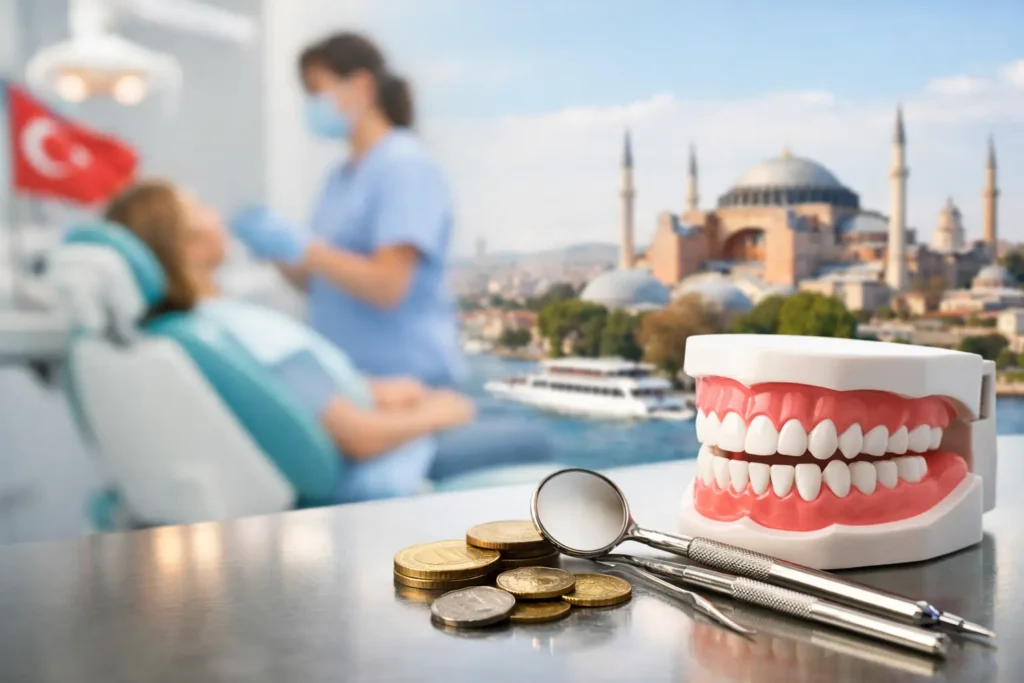

A straighter smile should not require putting your career, confidence, or financial plans on hold. For Americans comparing orthodontic options, clear aligners in Turkey can offer an elegant route to discreet treatment, advanced clinical care, and a carefully coordinated travel experience in Istanbul.
Unlike a cosmetic treatment completed in one appointment, aligner therapy is a planned process. The quality of your result depends on more than the trays themselves. It depends on accurate diagnostics, a realistic treatment plan, attentive monitoring, and a reliable plan for care once you return home. That is why the right clinic and the right coordination matter.
Why Americans Choose Clear Aligners in Turkey
Clear aligners use a sequence of nearly invisible, custom-made trays to guide teeth into more balanced positions over time. They are especially appealing to adults who want orthodontic improvement without the appearance and lifestyle restrictions of traditional metal braces. The trays are removable for meals, brushing, and important professional occasions, but they must be worn consistently to work as intended.
Turkey has become a leading destination for patients seeking high-value cosmetic and restorative dentistry. In Istanbul, internationally oriented dental clinics often combine modern imaging, digital treatment planning, and experienced orthodontic teams with pricing that may be more accessible than comparable private treatment in the United States.
The value is not simply about a lower treatment quote. For the right patient, it is about receiving organized access to sophisticated care while enjoying a premium medical travel experience. A well-planned visit can include airport transfers, accommodation coordination, language support, and appointments arranged around a clear itinerary.
Still, affordability should never be the only deciding factor. Orthodontics changes the relationship between your teeth, bite, and gums. A treatment plan should be selected for clinical suitability, not because it is the quickest option or because a dramatic promise sounds appealing.
Is Clear Aligner Treatment Right for You?
Clear aligners can be an excellent option for mild to moderate crowding, spacing, certain bite concerns, and teeth that have shifted after earlier orthodontic treatment. Many adults who avoided braces as teenagers appreciate that aligners are subtle and removable.
However, aligners are not the automatic answer for every smile. More complex bite discrepancies, severe rotations, active gum disease, untreated cavities, or teeth requiring significant restorative work may call for a different sequence of care. In some cases, braces, restorative dentistry, gum treatment, or a combination of approaches may deliver a more predictable result.
Your initial evaluation should look beyond front-tooth appearance. A responsible clinic reviews your dental and medical history, gum health, bite function, photographs, digital scans, and appropriate X-rays before confirming whether aligners are suitable. If a provider suggests treatment without gathering enough diagnostic information, that is a reason to ask more questions.
Aligners also demand personal discipline. Most plans require trays to be worn about 20 to 22 hours per day. Taking them out too often can delay movement, affect fit, and extend the overall timeline. Patients who prefer not to manage that level of daily responsibility may be better served by a fixed orthodontic option.
What Your Treatment Journey Can Look Like
For patients traveling from the United States, the process often begins before the flight. You may share photographs, previous dental records, and details about your goals during an initial consultation. This early conversation helps determine whether an in-person assessment in Istanbul is likely to be worthwhile and what length of stay may be appropriate.
At the clinic, your orthodontic team performs a comprehensive examination and captures precise digital records. These may include intraoral scans, photographs, and imaging needed to assess roots, bone levels, and bite relationships. From there, the clinician develops a personalized movement plan rather than relying on a one-size-fits-all cosmetic template.
Once your aligners are designed and produced, the team explains how to insert and remove them, how long to wear each set, and how to care for them. You should leave with clear written instructions, a schedule for tray changes, and direct guidance on what to do if a tray feels unusually tight, does not seat properly, or becomes lost.
Treatment duration varies. Limited correction can sometimes take several months, while more involved cases may take a year or longer. Attachments, small tooth-colored shapes placed temporarily on selected teeth, may be used to help certain movements occur more precisely. Some patients also need interproximal reduction, a conservative reshaping between teeth that creates the space needed for alignment.
Those details should be discussed plainly before treatment begins. A polished smile simulation can be motivating, but it is an estimate, not a guarantee. Teeth do not always move exactly as predicted, and refinement aligners are common. Knowing this from the beginning supports a more confident, realistic experience.
Planning Follow-Up Care From the United States
The central question for clear aligner patients traveling abroad is continuity of care. Your treatment does not end when you board your return flight. You will need periodic monitoring to confirm that teeth are tracking properly and to identify issues early.
Some cases can be monitored through scheduled virtual check-ins, photos, and digital tracking tools. Others may require in-person reviews at specific stages. The best arrangement depends on the complexity of your case, the system used, your oral health, and the clinical protocol established by your treating orthodontic provider.
Before committing, ask exactly how monitoring will work after you return to the U.S. Clarify who reviews your progress, how frequently you submit images, whether a local dentist can assist with routine checks if needed, and how refinements are handled. You should also understand whether the quoted plan includes refinement trays, replacement trays, retainers, or additional visits.
Retention deserves the same attention as alignment. Teeth naturally tend to drift, particularly after orthodontic movement. A retainer plan is essential to preserve your investment and protect the result you worked to achieve. Ask whether retainers are included, when they will be delivered, and how often they should be worn.
How to Choose a Clinic With Confidence
Premium care begins with clarity. A reputable clinic should be open about the qualifications of the dentist or orthodontic specialist overseeing treatment, the diagnostic process, the brand or type of aligner system offered, and the anticipated responsibilities on both sides of the treatment plan.
It is also wise to ask how the clinic manages clinical records, emergency questions, and changes to the original plan. High-quality care is not defined by a luxury waiting room or a low package price. It is defined by thoughtful case selection, precise planning, transparent communication, and support that continues beyond the first appointment.
When treatment is coordinated internationally, practical details can either elevate the experience or create unnecessary stress. Fix Dental Consultation helps American patients navigate clinic matching, scheduling, communication assistance, and travel-related coordination so they can focus on their smile rather than the logistics around it.
A concierge-style experience should never replace clinical due diligence. Instead, it should make excellent care easier to access. You deserve time to ask questions, review the plan, and feel comfortable with the pace of every decision.
Questions Worth Asking Before You Book
Before arranging travel, request straightforward answers about your expected number of aligners, estimated treatment duration, follow-up protocol, refinement policy, and retention plan. Ask whether your case will be supervised by an orthodontic specialist and what diagnostics are included in the assessment.
You should also discuss timing. If you are planning a wedding, a major presentation, or a professional milestone, tell the clinical team. Aligners are discreet, but attachments, temporary adjustments, and treatment-related sensitivity can affect how you feel during important events. Good planning accounts for your real life, not only your scan.
Finally, consider the total commitment rather than just the first trip. Account for travel, remote check-ins, possible refinements, retainers, and local dental hygiene visits at home. A transparent plan makes it easier to compare options fairly and protects you from avoidable surprises.
The best smile transformation is one that feels as considered as it looks. When clinical planning, consistent wear, and thoughtful international coordination come together, clear aligners can give you a refined path toward the confident smile you want.