A smile transformation abroad should feel exciting, not uncertain. Learning how to verify dentist credentials before committing to treatment gives you a clearer view of who will be responsible for your care, what standards the clinic follows, and whether the proposed plan is appropriate for your goals.
For American patients considering cosmetic or restorative dentistry in Istanbul, credentials are only one part of the decision. They should be evaluated alongside clinical experience, treatment planning, facility standards, communication, and the support available before and after you travel. A polished website and beautiful before-and-after photos may be encouraging, but they are not a substitute for professional verification.
Start With the Dentist’s License and Registration
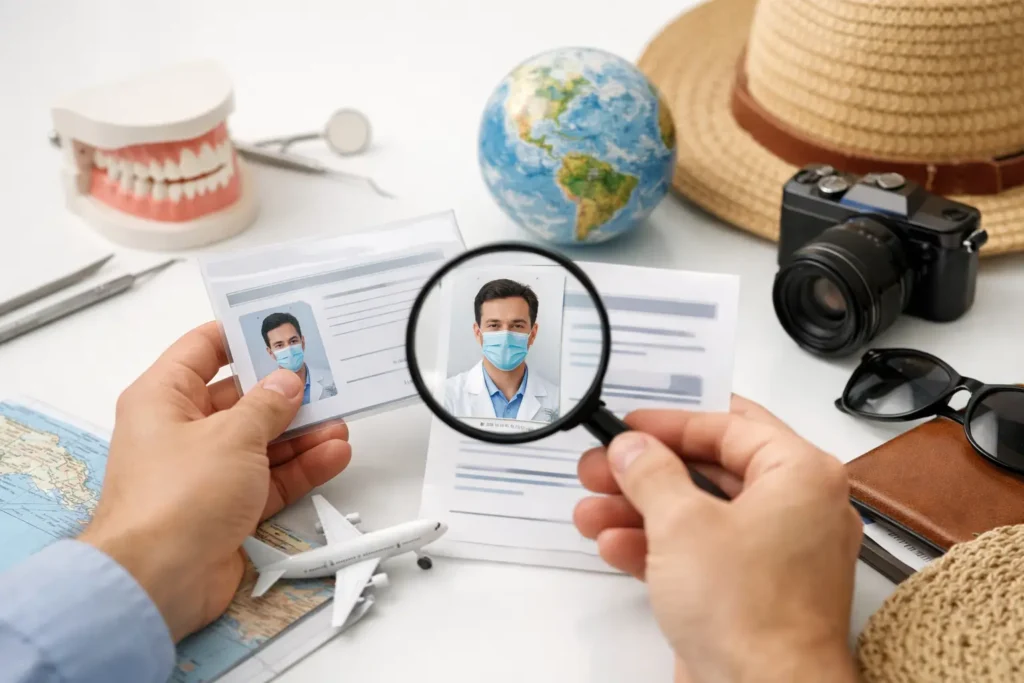
Every practicing dentist should be licensed and registered with the relevant health and professional authorities in the country where treatment will take place. Ask the clinic for the dentist’s full name, professional title, university, graduation year, and registration details. A reputable provider should be prepared to share this information clearly and without pressure.
In Turkey, patients can also ask whether the dentist is authorized to practice through the appropriate national and local professional bodies. The exact verification process may differ from what you would expect in the United States, so do not assume that a familiar-looking certificate tells the full story. Ask who issued it, whether it is current, and whether the dentist is practicing under the clinic’s legal registration.
Names matter here. Confirm that the dentist featured in your consultation, treatment plan, and case portfolio is the professional who will actually perform your procedure. In larger clinics, one dentist may conduct the consultation while another handles surgery, veneers, or final restorations. That can be perfectly reasonable when roles are transparent and the team is qualified. It is not reasonable when the clinic cannot tell you who is responsible for each stage of care.
How to Verify Dentist Credentials Beyond a Diploma
A dental degree is the starting point, not the final answer. The more complex the treatment, the more relevant advanced training and hands-on experience become.
For dental implants, ask about implant-focused training, surgical experience, the implant systems used, and how the provider handles bone loss, sinus issues, or unexpected complications. For a Hollywood Smile makeover, veneers, crowns, or full-mouth rehabilitation, ask about cosmetic treatment planning, bite assessment, digital smile design, and restorative experience. Orthodontic treatment requires a different skill set, and patients should understand whether they are seeing an orthodontic specialist or a general dentist offering orthodontic services.
Specialist titles can mean different things across countries. Rather than relying on a title alone, ask practical questions: How many cases similar to mine has the dentist completed? How long has the provider performed this procedure? What is the typical treatment timeline? What alternatives would they recommend if I am not an ideal candidate?
A confident clinical team will explain its approach in language you can understand. Be cautious if every patient seems to receive the same package, especially for irreversible treatment such as crowns, veneers, or implants. Premium dentistry should be customized. Your tooth structure, gum health, bite, medical history, and aesthetic goals all shape the right plan.
Review Real Cases With a Critical Eye
Before-and-after galleries can be useful, particularly for aesthetic dentistry, but they require context. Ask to see cases that resemble your own starting point. If you are considering implants, look for examples involving missing teeth, bone support, or full-arch restorations rather than only cosmetic veneer cases.
Pay attention to consistency. Are the photos well lit, taken from similar angles, and detailed enough to show the gums and bite? Does the result look natural for the patient’s facial features? Are there images from several stages of treatment, not simply a dramatic final reveal?
It is also reasonable to ask whether the photos are the clinic’s own patients and whether they represent completed work by the dentist assigned to you. Some clinics display manufacturer images, stock photos, or cases performed by another provider. There is no need to be confrontational. Clear, direct questions protect your decision and usually reveal how transparent a clinic is.
Reviews deserve the same careful approach. Read beyond the star rating. Look for comments about communication, treatment accuracy, comfort, hygiene, follow-up, and how concerns were handled. A few mixed reviews are not automatically a red flag. What matters is whether patterns emerge and whether the clinic responds professionally when a patient has an issue.
Verify the Clinic, Not Just the Dentist
An exceptional dentist still needs an appropriate clinical environment. Ask about the clinic’s sterilization protocols, imaging technology, on-site laboratory relationships, emergency procedures, and infection-control practices. For implant treatment or extensive restorative work, diagnostic tools such as digital X-rays and 3D imaging may be essential to planning safely and precisely.
You should also ask where treatment takes place and whether the facility is properly registered for the procedures being offered. A state-of-the-art setting is not defined only by elegant interiors. It is reflected in documented processes, trained clinical staff, reliable equipment, and a team that takes patient safety seriously.
Materials are another important part of verification. Ask which brands of implants, crowns, veneers, or aligners are proposed and request that they be listed in your treatment plan. For implants, patients may want to know whether components and records will be available if future maintenance is needed in the United States. The best option depends on your clinical situation, budget, and long-term care plan, but you should never be left guessing what is being placed in your mouth.
Request a Written, Personalized Treatment Plan
A detailed treatment plan is one of the strongest signs of an organized provider. It should identify the recommended procedures, the estimated number of appointments, the materials involved, the expected timeline, and the total projected cost. It should also explain what may change after an in-person examination.
This last point matters. Remote consultations are valuable, but photographs and X-rays shared from afar cannot always reveal every issue. A responsible dentist may refine the plan after examining your gums, bite, bone levels, and existing dental work. That is not necessarily a warning sign. The concern is a clinic that promises a guaranteed result or fixed treatment scope before adequate diagnostics.
Ask what is included if additional treatment becomes necessary. For example, will there be an added charge for extractions, temporary restorations, bone grafting, root canal treatment, or medication? If your schedule changes because healing takes longer than expected, who will help coordinate the next steps? Transparency around variables is part of quality care.
Ask About Follow-Up and Complication Planning
Traveling for dentistry requires a plan for the period after you return home. Even excellent treatment can require adjustments, particularly with implants, crowns, aligners, and extensive cosmetic work. Ask how the clinic handles post-treatment questions, what documentation you will receive, and whether a dedicated coordinator is available if concerns arise.
You should leave with copies of your treatment records, imaging when appropriate, material information, and a clear explanation of aftercare. If a local dentist later needs to evaluate your work, those details can make the process smoother.
Be realistic about guarantees as well. A warranty may sound reassuring, but its value depends on what it covers, how long it lasts, what exclusions apply, and whether travel costs are included if a return visit is needed. Dentistry involves biology, daily wear, and patient-specific factors. No ethical provider can promise that every result will be permanent or complication-free.
Use Independent Support When Comparing Clinics
The verification process can feel overwhelming when you are comparing providers across borders, time zones, and healthcare systems. Independent questions, organized records, and a U.S.-based point of contact can bring structure to the decision.
Fix Dental Consultation helps patients coordinate consultations with affiliated clinics in Istanbul while offering communication and travel support designed around comfort, clarity, and a premium treatment experience. Even with concierge coordination, patients should remain active participants: review the dentist’s information, understand the proposed treatment, and speak up when something is unclear.
The right dentist will not rush your confidence. They will provide identifiable credentials, explain the reasoning behind your plan, and make space for informed questions before you ever book a flight. That level of openness is often the first sign that your treatment experience is being built around more than a beautiful final photo.