A crown can change far more than one tooth. It can restore the confidence to smile in photographs, speak freely in meetings, and enjoy meals without protecting one side of your mouth. When comparing zirconia versus porcelain crowns, the right choice is not simply about choosing the strongest or the prettiest material. It is about selecting a restoration that suits your bite, the tooth being treated, your cosmetic expectations, and the long-term look of your smile.
For patients planning treatment in Istanbul, this decision also deserves a clear conversation before travel. A premium result depends on thoughtful treatment planning, precise shade selection, and a clinic team that understands how every crown will work within the full smile.
Zirconia versus porcelain crowns: the core difference
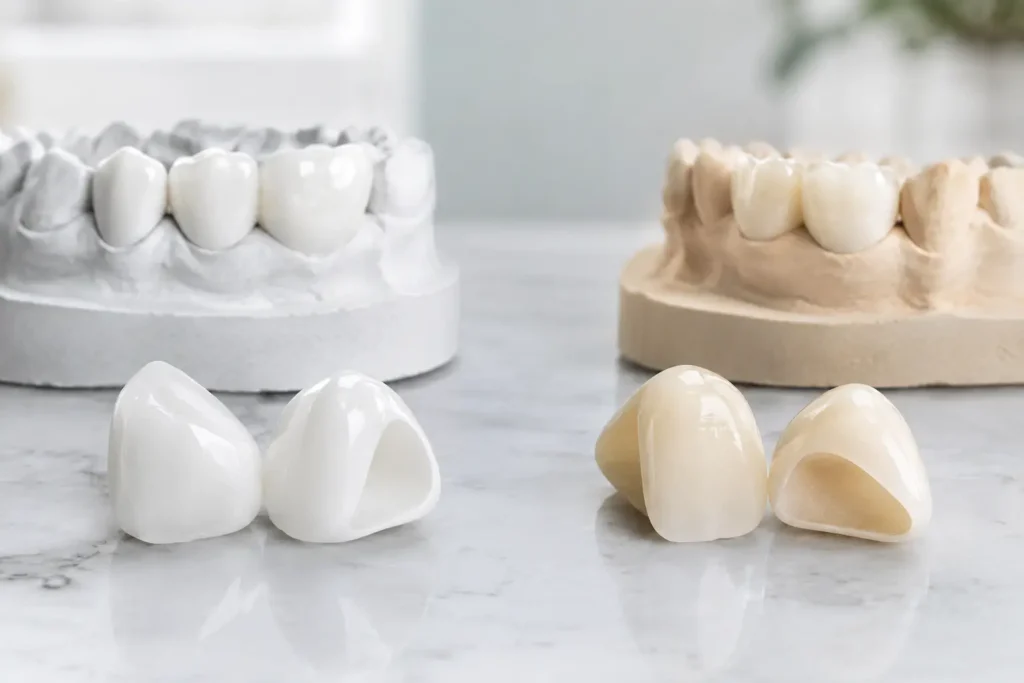
Zirconia and porcelain are both used to create lifelike, metal-free dental restorations, but they perform differently. Zirconia is a highly durable ceramic material prized for its strength. It is commonly used for back teeth, implant restorations, bridges, and patients with a powerful bite or a history of grinding.
Porcelain crowns are valued for their translucency and natural light reflection. High-quality porcelain can closely resemble the subtle variation found in natural enamel, which makes it a popular choice for visible front teeth and detailed cosmetic smile transformations.
One point often causes confusion: zirconia is technically a type of ceramic, and modern zirconia crowns can be highly esthetic. The comparison is usually between a monolithic zirconia crown, made from one solid block of material, and a more translucent porcelain or glass-ceramic crown. There are also layered zirconia crowns, which combine a zirconia framework with porcelain for added visual depth.
The best material is therefore not a universal answer. A crown on a molar and a crown on a central front tooth are asked to do different jobs.
When zirconia is the stronger choice
Zirconia is respected for its exceptional fracture resistance. It can handle substantial chewing forces and is less likely to chip than conventional layered porcelain. For a patient who clenches, grinds, or has worn down natural teeth, that resilience can be a major advantage.
This material is often an excellent fit for molars, where strength matters more than a glass-like enamel effect. It may also be recommended for implant crowns. Implants do not have the same cushioning ligament as natural teeth, so material selection and bite adjustment deserve particular care.
Modern multilayer zirconia has improved the cosmetic side of the equation. It can offer gradations in color and translucency that look far more natural than the opaque zirconia of earlier generations. In the hands of an experienced dental laboratory and cosmetic dentist, it can be an attractive option for many areas of the mouth.
There are trade-offs. The most durable solid zirconia may not provide the same depth, translucency, and light play as premium porcelain. If you are replacing one highly visible front tooth next to untouched natural teeth, a ceramic with superior optical properties may blend more elegantly.
Zirconia can also be very hard. A properly designed, polished, and adjusted crown is designed to be kind to opposing teeth, but rough surfaces or an unbalanced bite can contribute to wear. This is why quality is not only about the material itself. Digital planning, finishing, polishing, and final bite checks are all part of the result.
Why porcelain remains a favorite for cosmetic detail
Porcelain has long been a leading choice in esthetic dentistry because it can mimic natural enamel so convincingly. It reflects and transmits light in a way that gives a tooth dimension rather than a flat, uniform appearance. For the smile zone, that nuance can matter.
Patients considering a Hollywood Smile makeover often want brightness without an artificial look. A carefully selected porcelain crown can be personalized for translucency, texture, contour, and shade. The goal is not simply a whiter tooth. It is a tooth that belongs naturally in the smile while delivering the polished finish the patient wants.
Porcelain is particularly appealing when the restoration must match neighboring natural teeth. It may be used for front crowns where visual harmony is the first priority, especially for patients without significant grinding habits.
Its limitation is that porcelain can be more vulnerable to chipping or fracture under heavy force, depending on the specific ceramic and design. This does not make porcelain a weak choice. It means that a patient with severe bruxism may need a different material, a protective night guard, or both. A beautiful crown should be designed for the real conditions of your mouth, not only for a close-up photograph.
Porcelain-fused-to-metal is a separate category
Some patients hear the term porcelain crown and assume every porcelain restoration is the same. Porcelain-fused-to-metal crowns, often called PFM crowns, have a metal substructure covered by porcelain. They have a long clinical history and can be durable, but they may show a darker edge near the gumline over time and generally do not offer the same translucency as modern all-ceramic options.
For patients seeking a refined, metal-free cosmetic result, contemporary all-ceramic porcelain or high-translucency zirconia is often more aligned with the desired appearance. Your dental team should explain exactly which material is proposed, not rely on a broad label alone.
The questions that should guide your decision
A high-quality consultation should begin with your needs, not a preset material recommendation. Your dentist will evaluate the tooth’s location, how much natural structure remains, the condition of the surrounding gums, and the way your upper and lower teeth meet.
Your smile goals matter just as much. Are you restoring one tooth that must disappear among natural enamel? Are you rebuilding multiple teeth as part of a full smile design? Do you want a very bright, uniform aesthetic, or a softer, natural-looking shade? These choices influence the recommended ceramic, as well as crown shape and surface character.
Your habits should be part of the conversation. If you grind your teeth, chew ice, or frequently bite hard foods, disclose it. A durable zirconia solution and a custom night guard may protect your investment more effectively than choosing a more delicate material for appearance alone.
It is also worth discussing tooth preparation. Some crown materials may allow for more conservative preparation in appropriate cases, but this depends on the tooth, the restoration design, and the space available. Preserving healthy tooth structure is always a meaningful clinical objective.
Planning a crown treatment trip with confidence
Traveling for dental care should not mean making material decisions from a vague treatment quote. Before committing to treatment, request clarity on the type of crown, the reason it is recommended, the number of appointments required, and the expected timeline for try-ins and final placement.
For larger cosmetic cases, photographs, digital scans, X-rays, and a detailed bite assessment help the dentist create a more predictable plan. A temporary phase or preview may be appropriate when changing multiple front teeth, giving you an opportunity to evaluate shape, length, and overall smile character before final restorations are completed.
The clinic’s laboratory partnership also matters. Beautiful crowns rely on more than chairside preparation. Skilled technicians translate the clinical plan into natural contours, precise contacts, and a finish that complements your complexion and facial features. State-of-the-art facilities are valuable, but artistic judgment and careful quality control remain essential.
Fix Dental Consultation helps American patients approach this process with coordinated support, from initial questions and clinic matching to travel-related arrangements and communication assistance. The purpose is to make a major restorative decision feel organized, personal, and well supported from the first conversation through the final smile reveal.
A crown should look beautiful and live well
The better choice between zirconia and porcelain is the one that performs beautifully in your mouth every day. Zirconia may offer the confidence of exceptional strength for a hardworking back tooth or a high-force bite. Porcelain may deliver the delicate, luminous detail that makes a front-tooth restoration feel indistinguishable from natural enamel. In many sophisticated treatment plans, both materials may have a place.
Bring your priorities to the consultation: durability, brightness, a natural match, comfort, or a complete smile transformation. With the right clinical plan and an experienced cosmetic team, the crown you choose can be more than a repair. It can be a lasting part of the smile you are ready to show.