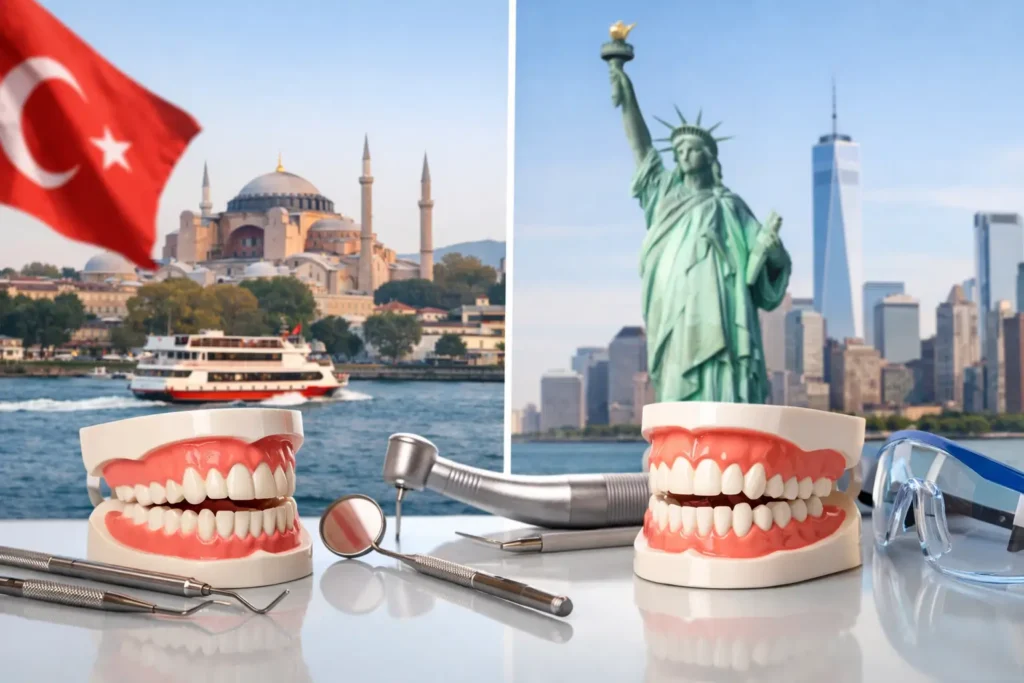
A full-arch implant plan or cosmetic smile makeover can change far more than a reflection in the mirror. It can also bring a U.S. treatment estimate into the tens of thousands of dollars. That is why the Turkey vs US dental care decision is not simply about finding the lowest price. It is about deciding where you can receive the right clinical plan, clear communication, and a level of support that makes a major treatment feel manageable.
For American patients considering implants, veneers, crowns, whitening, or orthodontic treatment, Turkey has become a serious option. Istanbul in particular combines internationally experienced dental teams with modern private clinics and a hospitality culture built around international guests. Still, choosing treatment abroad deserves the same care as choosing a dentist near home. The strongest decision comes from comparing the full experience, not a headline price.
Turkey vs US Dental Care: The Cost Difference
The largest difference patients notice is cost. In the United States, advanced restorative and cosmetic dentistry often reflects higher operating expenses, insurance complexity, laboratory fees, staffing, and regional overhead. Comprehensive treatment can be excellent, but it may also be financially out of reach for patients paying without substantial dental coverage.
In Turkey, many private clinics can offer lower treatment fees while using recognized implant systems, digital planning, and high-quality ceramic restorations. The cost advantage is often most meaningful for treatments involving multiple teeth, such as full-mouth crowns, implant-supported bridges, or a Hollywood Smile makeover. Depending on the treatment plan, the savings can be substantial enough to offset flights and accommodation.
That does not mean every treatment should automatically be taken abroad. A single filling, routine cleaning, or urgent toothache may be better handled close to home. The value of international care becomes clearer when the procedure is significant, elective, and planned in advance.
Price quotes also need context. A quote should state what is included: diagnostics, scans, extractions if needed, temporary teeth, final restorations, anesthesia, laboratory work, transportation, and follow-up appointments. A low initial number without a detailed plan is not a meaningful comparison. Premium care is transparent about both the clinical scope and the patient experience.
Quality Is About Planning, Not Geography
Exceptional dentists practice in the United States, and exceptional dentists practice in Turkey. The country alone does not determine quality. What matters is the clinician, the clinic’s standards, the materials selected, the diagnostic process, and whether your treatment has been designed for your actual oral health needs.
For complex implant or cosmetic cases, look for a clinic that begins with detailed records. This may include panoramic imaging, CBCT scans when clinically appropriate, photographs, bite analysis, and a conversation about your goals. A polished smile should never be planned from a single photo or a one-size-fits-all package.
Ask who will perform each stage of care. A coordinated case may involve a restorative dentist, oral surgeon or implant specialist, endodontist, orthodontist, and dental laboratory. That collaboration can be a major advantage when it is organized well. You should also understand the proposed materials, whether zirconia, lithium disilicate, porcelain, or another option, and why they suit your case.
A beautiful result is not only about bright teeth. It should respect facial proportions, gum health, speech, bite function, and long-term comfort. Patients should be cautious of anyone who promises to place extensive restorations without first discussing the condition of the teeth beneath them. In some cases, conservative treatment is the better choice. In others, staged treatment produces a safer, more refined result.
The Real Trade-Off: Convenience Versus a Planned Journey
U.S. dental care has an obvious advantage: proximity. You can visit the same office for consultations, adjustments, and routine follow-up. This is particularly valuable for patients with unstable dental health, a complicated medical history, or a procedure likely to require frequent monitoring.
Turkey asks more of the patient upfront. You will need to travel, set aside enough time, share records before departure, and understand whether your case requires one visit or multiple visits. Implant treatment often needs a healing period before final crowns are placed. Orthodontic treatment also requires ongoing monitoring, though some plans can incorporate remote check-ins and local care.
For many cosmetic cases, however, the treatment schedule can be highly efficient. Modern digital workflows and on-site or closely coordinated laboratories can allow patients to complete carefully planned crown, veneer, or whitening treatment within a defined travel window. The key is to arrive with realistic expectations. Fast should mean well-coordinated, not rushed.
This is where a concierge-style coordination service can make the experience feel entirely different. Rather than managing airport transfers, appointment times, hotel details, translation, and clinic communication alone, patients can have an organized itinerary around their treatment. It does not replace clinical judgment, but it can remove much of the friction that makes international care feel intimidating.
Safety and Communication Deserve Direct Questions
Safety should be evaluated through specifics, not assumptions. Before confirming care, ask how the clinic handles sterilization, infection control, medical emergencies, patient records, and informed consent. Ask whether it has experience treating international patients and how it documents your treatment for future providers.
Communication is equally essential. You should be able to explain your concerns, receive answers in clear English, and understand what will happen at each appointment. A certified translator can be valuable, especially during consent discussions and detailed treatment planning, but your clinical team should also make space for questions. Never feel pressured to approve work you do not understand.
Before traveling, request written information on the following:
- Your preliminary treatment plan and the factors that could change it after an in-person exam
- The names or specifications of planned implant and restoration materials
- Expected treatment dates, healing requirements, and whether a return visit may be necessary
- Warranty terms, aftercare recommendations, and how concerns will be handled after you return home
No dental procedure is risk-free, whether performed in New York, Los Angeles, or Istanbul. The goal is not to seek guarantees. It is to choose a team that explains risks honestly, plans carefully, and gives you a practical path for follow-up.
Aftercare Is Part of the Investment
The most overlooked question in Turkey vs US dental care is what happens after the final appointment. Cosmetic and restorative work requires maintenance. You may need a night guard, professional cleanings, bite checks, or occasional adjustments over the years. Your local dentist or hygienist can often support routine care, provided you leave Turkey with complete records and a clear understanding of the work completed.
For implant patients, home care and regular hygiene appointments are central to protecting the result. Smoking, untreated gum disease, grinding, and missed maintenance can affect outcomes regardless of where treatment was performed. The clinic’s work matters greatly, but your habits and follow-up matter too.
A responsible international plan should include clear instructions for the first days after treatment and a defined route for communication if questions arise once you are back in the United States. If a concern requires an in-person assessment, you should know whether to contact your local dentist, the treating clinic, or both.
Who Is a Strong Candidate for Treatment in Turkey?
Patients who tend to benefit most are those seeking substantial elective cosmetic or restorative treatment, who can travel without rushing, and who are willing to complete the planning process carefully. They are often looking for an elevated experience that pairs state-of-the-art dental care with the comfort of coordinated travel.
Treatment in Turkey may be less suitable if you need immediate emergency care, cannot commit to the recommended healing timeline, have uncontrolled health conditions, or prefer every stage of treatment to occur with a local provider. There is no prestige in forcing an international option to fit a situation where it does not serve you.
The most confident patients are not those who ignore the trade-offs. They are the ones who ask precise questions, compare complete plans, and choose a provider network that treats their time, safety, and final result with equal importance.
A smile transformation should feel considered from the first consultation to the long-term care that follows. Fix Dental Consultation helps American patients explore that path with U.S.-based coordination, clinic matching, and travel support designed to make treatment in Istanbul feel more informed, more comfortable, and distinctly personal.