A smile can look healthy on paper and still feel slightly off in the mirror. Maybe the teeth are crowded at the bottom, the front teeth lean unevenly in photos, or the bite never felt quite right. Orthodontic smile correction is designed for exactly that space between basic function and truly polished aesthetics – where alignment, symmetry, and facial balance all matter.
For many adults, this is not about starting over. It is about refining what they already have. A well-planned orthodontic treatment can straighten teeth, improve bite harmony, create a more balanced smile line, and make future cosmetic work more precise. When patients are considering treatment abroad, the appeal becomes even stronger: access to advanced care, experienced clinicians, and a more elevated, organized treatment journey.
What orthodontic smile correction really means
Orthodontic smile correction is more than making teeth look straight. It focuses on how the teeth fit together, how much tooth shows when you smile, how the arches are shaped, and whether the overall result feels natural with your face. That is why two people with similar crowding may need very different treatment plans.
In cosmetic-focused cases, orthodontics is often used to improve spacing, reduce overlap, correct bite issues, and bring better proportion to the smile before any whitening, bonding, veneers, or other finishing treatments. In other cases, orthodontics alone is enough to create the transformation a patient wants.
This distinction matters. If teeth are simply covered or reshaped without addressing underlying alignment, the result can look less natural and may require more aggressive cosmetic work. Orthodontic treatment often creates the foundation for a cleaner, more conservative, and more elegant finish.
Why adults choose orthodontic smile correction
Most adult patients are not looking for a dramatic medical explanation. They are looking for a smile that feels more confident, more refined, and more consistent with how they want to present themselves. Professionals often notice alignment concerns in video calls, meetings, and photographs long before they decide to do something about them.
There is also a practical side. Correcting tooth position can make brushing and flossing easier, reduce uneven wear, and help distribute bite forces more evenly. Aesthetic improvement may be the reason someone starts treatment, but function and long-term maintenance are often part of the value.
That said, orthodontic smile correction is not always the fastest route. Some cosmetic concerns can be improved more quickly with veneers or bonding. The trade-off is that orthodontics preserves more of the natural tooth structure and often delivers a result that looks less manufactured. The right choice depends on the starting point, the timeline, and how conservative the patient wants to be.
What can be corrected
A premium orthodontic plan can address more than obvious crookedness. It may improve mild to moderate crowding, spaces between teeth, rotated teeth, bite irregularities, uneven arch shape, and midline discrepancies where the upper and lower front teeth do not line up attractively.
It can also help with smile width. Some patients feel their smile looks narrow or that too much dark space appears at the corners when they smile. In the right case, orthodontic movement can create a broader, more balanced look. Others may want to correct protrusion or reduce the appearance of teeth that seem to flare forward.
Not every concern belongs to orthodontics alone. Tooth color, shape, worn edges, and gum contour may still need cosmetic finishing. The advantage of a coordinated treatment plan is that each phase supports the next instead of competing with it.
Orthodontic smile correction in a cosmetic treatment plan
This is where high-level planning makes a visible difference. Orthodontics is often the first phase in a larger smile transformation because it places the teeth in better positions before cosmetic enhancements begin. That can mean less tooth reduction, more predictable veneer design, and a final result that feels proportionate rather than overbuilt.
For example, a patient considering a Hollywood Smile may not need extensive restorative work on every visible tooth if alignment is corrected first. Another patient may realize that once spacing and rotation are improved, whitening alone is enough. These are the moments where thoughtful case design protects both aesthetics and value.
The best plans are not one-size-fits-all. Some patients want the most comprehensive result possible. Others want the greatest visual improvement with the least disruption to work and travel. A reputable consultation process should account for both.
Treatment options and what affects the timeline
Most adults considering orthodontic smile correction ask the same question first: how long will it take? The honest answer is that it depends on the complexity of movement, the bite, and whether the goal is cosmetic refinement or deeper correction.
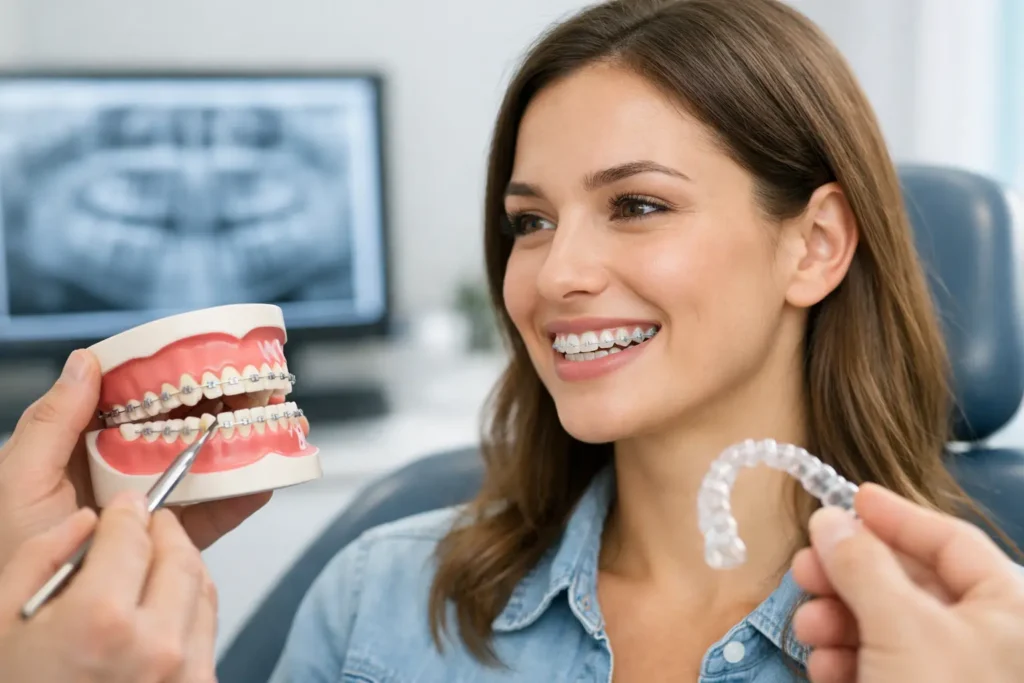
Minor alignment changes may take only several months. More involved cases can take a year or longer. Clear aligners are popular with adults because they are discreet and easier to fit into a professional lifestyle. In other cases, fixed braces may still be the better clinical option, especially when more precise or complex movement is needed.
Compliance matters. Aligners only work well when they are worn as instructed, and treatment can slow down if trays are not used consistently. Braces demand less daily decision-making, but some adults prefer the aesthetics and convenience of aligners. There is no prestige in choosing the wrong system for your case. The premium option is the one that delivers the best result with the fewest compromises.
Why many patients look to Istanbul
For American patients, orthodontic treatment abroad is no longer a fringe idea. It has become a serious option for those who want advanced care, sophisticated clinic environments, and a more favorable cost structure without giving up organization or comfort.
Istanbul stands out because it combines internationally experienced dental professionals with modern clinics and a city built for global travel. For cosmetic-minded patients, it also offers something equally important: coordinated treatment planning. Orthodontics, whitening, restorative work, and smile design can often be evaluated within the same network, which creates a more cohesive path from consultation to final result.
Cost is naturally part of the conversation, but it is rarely the only reason people choose treatment abroad. Many patients want responsive communication, a clear treatment roadmap, and assistance that extends beyond the clinic. When travel, scheduling, transfers, and translation are handled with care, the experience feels far more secure and far less overwhelming.
That is where a concierge-led model adds real value. A company like Fix Dental Consultation helps patients move through the process with greater clarity, from initial case review to clinic matching and travel coordination, so treatment feels intentional rather than improvised.
What to ask before committing
A beautiful result starts with asking better questions. Patients should understand whether orthodontics alone can meet their goals or whether it is being recommended as preparation for additional cosmetic work. They should also ask how the bite will change, how long treatment is expected to take, and whether remote follow-up is possible if they are returning to the US between visits.
It is also worth discussing limitations. Orthodontic smile correction can reposition teeth, but it does not change tooth size, brighten enamel, or repair worn edges. If those issues are part of the concern, the most elegant result may come from staged treatment rather than expecting orthodontics to do everything.
The strongest providers are usually very clear about this. They do not oversell orthodontics as a cure-all, and they do not push cosmetic work where conservative movement would do the job better.
Is orthodontic smile correction worth it?
For the right patient, absolutely. It can improve the way the smile looks, the way the bite functions, and the way future cosmetic work is planned. It is one of the few treatments that can make a smile more attractive while also preserving natural structure.
Still, worth is personal. If someone wants immediate visual change before an event, orthodontics may feel too gradual. If someone wants a more refined, natural-looking transformation with long-term value, it is often the smarter investment. The decision is not only about speed or budget. It is about the kind of result you want to live with every day.
A well-corrected smile rarely looks overdone. It simply looks right – balanced, confident, and easy. And for many patients, that is the most luxurious outcome of all.